
call us today (813) 213-0000
Tampa Firearm Disability Defense Lawyer
Experienced Firearm Disability Defense Attorney in Tampa
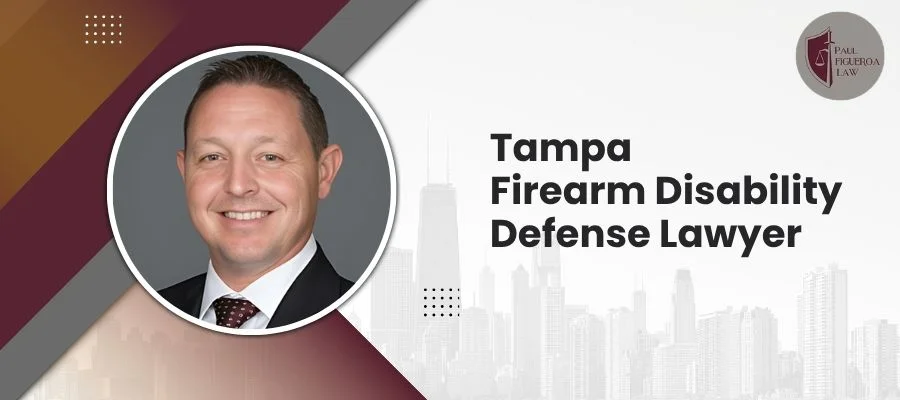
As a gun owner, it can be frustrating when your ability to own your firearm is threatened or taken away. No matter the reason you may have lost your right to own or possess a firearm, you have an equal right to advocate for the ability to do so. An experienced Tampa firearm disability defense lawyer can work with you to protect your ability to defend yourself, loved ones, and your home.
About Paul Figueroa Law
Attorney Paul L. Figueroa was raised in Hillsborough County and has spent years handling cases in Tampa. Before opening his own practice, he worked as a public defender for the 13th Judicial Circuit, giving him insight into both sides of the legal process. Paul is an active member of the local legal community, serving on the Board of Directors of the Florida Association of Criminal Defense Lawyers as Hillsborough County’s Chapter Representative.
What Is Firearm Disability?
Firearm ownership is an important part of many Floridians’ lives. In 2025, approximately 35.3 per 100 residents in Florida owned a firearm. During the same year, 409,555 background checks were ordered by vendors across the state. Firearm disabilities can pose a significant burden for millions in Tampa.
A firearm disability is a legal status in Florida that bars someone from legally purchasing, possessing, receiving, or owning a firearm or ammunition. A ban on gun ownership can be issued on both federal and state levels and requires separate legal proceedings to overturn. Lawful firearm possession can be banned for many reasons. Common grounds include:
Felony Conviction
In Florida, it is illegal for someone to have a firearm, ammunition, or any related component if they were found guilty of a felony. The severity and nature of the offense do not matter. Juvenile delinquent acts that would be considered felonies if committed by an adult also result in firearm disability. A felon possessing a firearm can be charged with a second-degree felony punishable by up to 15 years in prison and fines worth up to $10,000.
Convicted felons in Florida may petition the governor’s office for an executive clemency. These orders include pardons for the crime, restoration of full civil rights, or the specific authority to own a firearm. Each type of clemency has its own guidelines. Regaining firearm rights requires the petitioner to:
- Completed all terms of conviction sentences
- At least eight years have passed since completing punishments
- No pending criminal charges
- No outstanding victim restitution
- No standing financial penalty worth over $1,000
Mental Health Adjudication
One common reason for a firearm disability in Florida is when someone is committed to a mental institution or is adjudicated as mentally defective. Mentally defective is defined as someone who is unable to manage their own affairs or is a danger to themselves or others. Violations of mental health firearm disability often fall under the same punishments for felony possession.
The main pathway towards relief from mental health firearm disability is to petition the court that made the initial judgment for relief. A court hearing is scheduled where the petitioner presents evidence demonstrating they are no longer a danger. The state attorney may object to the proceedings and argue against lifting the firearm disability at the meeting. An approved request removes the circumstances for the initial removal from public records.
Domestic Violence Conviction
Restraining orders for domestic violence, stalking, or similar offenses often result in an order for a firearm disability. Possessing a firearm during an injunction is a first-degree misdemeanor with potential punishment of a $1,000 fine and one year in prison. The strongest way to regain gun ownership rights is to overturn the protection order at the hearing for determining a final protection order.
Federal law imposes a lifetime ban for those found guilty of a domestic violence offense, regardless of whether it is a misdemeanor or felony. In these scenarios, petitions for a record expungement or executive clemency are the central tool to overturn a firearm disability.
Drug Concerns
Drugs and alcohol can play a role in banning someone from owning a firearm. Under state law, anyone who has been convicted of any drug crime or treated for addiction can be subject to a firearm disability. Federal regulations can bar any use of controlled substances, including lawful medical marijuana. Drug-based firearm disabilities can be revoked by demonstrating that a person has ended habitual drug use.
Hire a Firearm Disability Defense Lawyer
Regaining your gun crime rights can be a confusing and lengthy process, with simple errors resulting in significant delays. Hire a firearm disability defense lawyer to help with your situation. Your Tampa firearm disability defense attorney can guide you through each stage of the process. A few key services that Paul Figueroa Law provides include:
- Advise on approach. Our team can learn the circumstances of your firearm disability and explain the process that matches your situation.
- Draft and file paperwork. Overturning a firearm disability requires specific wording, with minor errors carrying the potential for automatic denials or lengthy delays. An experienced attorney can draft and file all documents for your case.
- Analyze evidence. Evidence plays a key role in proving that you are capable of safely possessing a firearm. Legal counsel can assist in reviewing the documentation and other evidence that will be used in the case, both for and against you.
- Representation at hearings. Court hearings can be stressful events, and it can be difficult to present your case. We can represent you at all court appearances for your firearm disability defense at Edgecomb Courthouse downtown or any other venue.
- Plan steps after a denial. There are still options available if your request is denied. Your lawyer can file an appeal on the decision or prepare for future requests.
Tampa Firearm Disability Defense Lawyer
Paul Figueroa Law recognizes how aggravating dealing with firearm disability can be. Attorney Paul Figueroa and our team can use years of experience and knowledge to protect your gun ownership rights.
Contact us today to schedule your initial consultation. In this meeting, we can learn the details of your case, the challenges you face, and the strategies for protecting your firearm rights. Our Tampa offices are located on East Jackson Street, just south of the Hillsborough County Courthouse Annex, east of Tampa City Hall, and north of Selmon Expressway.
Practice Areas

Follow Us
Contact Us
806 E Jackson Street
Suite 1
Tampa, FL 33602
By appointment only.
Office Phone Number (813) 213-0000
Fax Number(813) 902-7000




Operating

Trust
Copyright © 2026 Paul Figueroa Law. All rights reserved. Disclaimer | Site Map | Privacy Policy
*Images are obtained under license from Canva and other third-party stock image providers, with attribution included where required.
Digital Marketing By 